Wedding invitation wording: a complete guide
Copyable wording for the celebration you are actually having, plus the etiquette that changes from one country to the next.
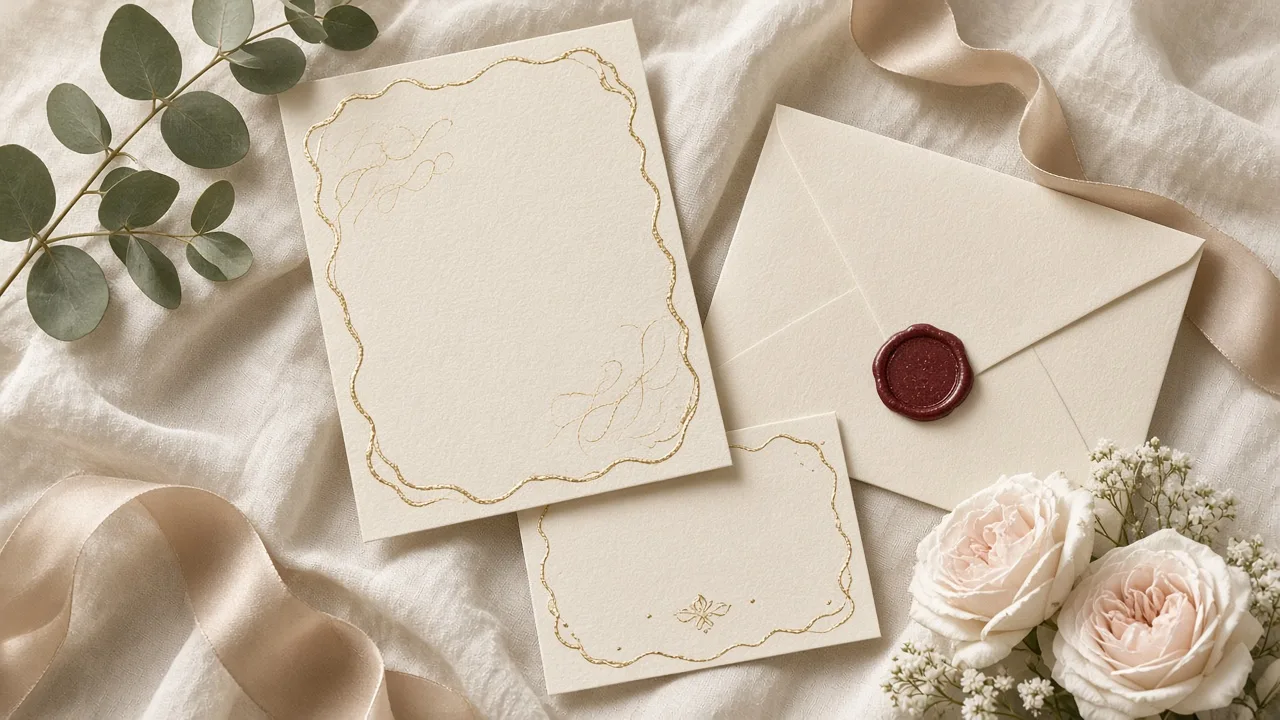
Good wedding invitation wording tells a guest what is happening, and it sounds like the people who sent it. This is how to word a wedding invitation.
The standard order is short. Keep the lines that apply, and drop the rest.
- The hosts, when someone else is sending the invitation
- The request, the sentence that does the inviting
- The couple’s names, in the order they choose
- The day, the date with the month written out, and the time
- The venue, with city and country when guests need them
- The reception, if it is separate
- How to reply, and by when
- Dress, children, or anything else a guest needs before saying yes
Facts a guest far away can act on, in a voice the hosts still recognise.
Norms change with culture and region. Spell names as people spell them, and write Saturday, 12 June 2027, not a numeric date. Names in the samples are invented. More is in the weddings journal. The wedding invitations can carry the finished words.
The parts of a wedding invitation
The host line
The host line names who is giving the celebration, not everyone who loves the couple. Parents’ names come first when they host. When the couple hosts, their names can lead. Use a title only when that person uses it.
The request line
This sentence does the inviting. In some English-language customs, request the honour of your presence is used for a place of worship, and request the pleasure of your company for a civil ceremony or reception. Neither is universal. “Invite you to their wedding” is complete. Pick one voice.
The couple’s names
Use the order the couple chooses. A bride first, an elder first, or the script of the language are all real customs, and none is the world standard. And treats the names equally. To is more ceremonial.
The date and time
Write the day, date, month, and year. 06/07/2027 is June in some countries and July in others. “At half past three” suits a formal card. “15:30 Japan Standard Time” is clearer when guests are travelling or joining online.
The venue
Give the place and the city, and the country when anyone is coming from abroad. A street address can sit on the map of a digital invitation. If the ceremony and the meal are in different places, print both.
The reception line
One line is enough: “Dinner and dancing to follow”, or “Walima to follow”. If guests are not invited to the ceremony, the card has to say so. Do not leave them to infer a private vow.
The RSVP line
Say where to reply, and by when. A date without a method, or a method without a date, leaves the hosts chasing answers. The line can stay short once the method is obvious.
Dress and the other details
Dress, children, and travel belong on a smaller line, or on the page that travels with the card. “Black tie” needs a few ordinary words when guests do not share one dress code.
Wedding invitation wording examples
Samples, not scripts. Swap in the real names. Each card can be copied as written.
Formal wedding invitation wording
One set of parents, a classic tone. “Their daughter” is optional.
Anna Nowak and Tomasz Wójcik
request the pleasure of your company
at the marriage of their daughter

Elena Wójcik
and
James Okonkwo

Saturday, 12 June 2027
at half past three in the afternoon
The Glass House, Cape Town

Dinner and dancing to follow
When the couple is hosting
Do not invent a parent as the host. “Together with their families” includes relatives without making them the hosts.
Together with their families

Amara Shah
and
Leo Berg

invite you to their wedding

Saturday, 20 June 2026
at half past four in the afternoon
The River Room, Lisbon

Dinner and dancing to follow

Kindly reply by Sunday, 24 May 2026
Both families hosting
Name both families, and keep the two lines similar in length. A longer line is usually just a longer name.
Laila Nair and Harun Nair
and
Miriam Cohen and Joseph Cohen
request the pleasure of your company
at the wedding of their children

Priya Nair
and
Daniel Cohen

Saturday, 11 July 2026
at six o’clock in the evening
The Garden Court, Singapore

Dinner to follow
Casual wedding invitation wording
Casual wedding invitation wording can be short. It still needs the time and the place.
Hana Sato and Mateo Alvarez
are getting married

Saturday, 9 January 2027
at noon
Our home, Mexico City

Lunch afterwards
Please reply by Sunday, 13 December 2026
Religious ceremonies
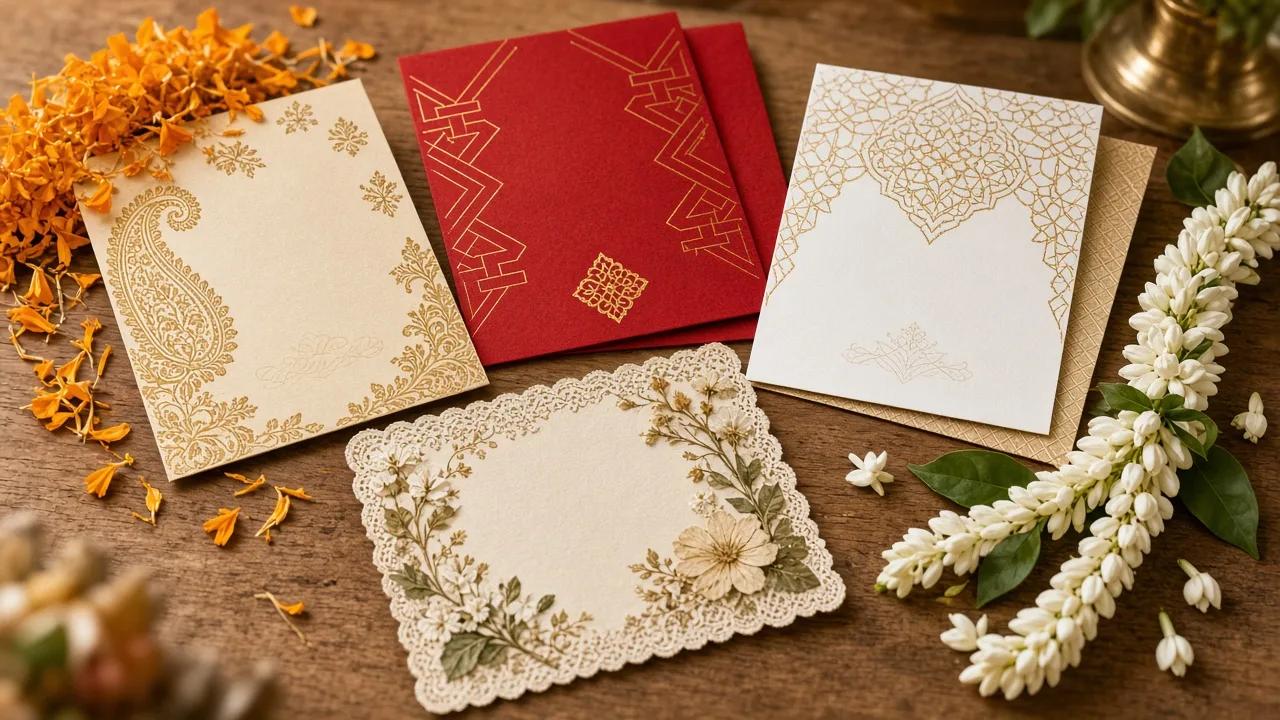
Name the ceremony in the family’s words. These suit a church, a mosque, a temple, or a synagogue, and they are not the only form.
A church service may be a marriage, a Mass, or a blessing. Honour, on the card below, is a choice, not a rule.
Giulia Romano and Marco Romano
request the honour of your presence
at the marriage of their children

Sofia Romano
and
Omar Haddad

Saturday, 12 June 2027
at three o’clock in the afternoon
All Saints Church, Melbourne
A nikah is the Islamic marriage contract. A walima is the feast. If guests are invited to both, print both.
Dr Farah Rahman and Hassan Ali
request the pleasure of your company
at the nikah of their children

Amina Rahman
and
Yusuf Khan

Saturday, 12 September 2026
at four o’clock in the afternoon
Noor Mosque, Amman

Walima to follow
Temple weddings often include more than one rite. “Wedding ceremony” here is waiting to be replaced with the rite your family uses.
Rajan Iyer and Meera Iyer
together with
David Mehta and Ruth Mehta
welcome you to the wedding ceremony of

Ananya Iyer
and
Arun Mehta

Saturday, 21 November 2026
at half past ten in the morning
Shanti Temple, Singapore

Lunch to follow
Many Jewish weddings are timed around Shabbat. Print the day you are marrying. Some families add the Hebrew date beside the civil one.
Rebecca Levy
and
Eli Navarro
together with their families
invite you to their wedding

Sunday, 4 October 2026
at half past five in the evening
Kehila Synagogue, Montreal

Dinner to follow
An interfaith or multicultural wedding
If you are holding two ceremonies, give each a time. Do not rename one family’s rite with the other family’s word.
Leila Mensah
and
Jonah Adler
together with their families
invite you to their wedding

Ceremony under the chuppah
at two o’clock in the afternoon
Blessing at the family church
at half past four

Saturday, 8 May 2027
The Garden Court, Lisbon

Dinner to follow
An adults-only wedding
Say it on the card before anyone books travel. Name any children who are exceptions.
Clara Duarte and Ben Okello
invite you to their wedding

Saturday, 27 February 2027
at five o’clock in the afternoon
The River Room, Nairobi

Dinner and dancing to follow

We are keeping this celebration to adults,
and we would love to see you there.
A small wedding or elopement celebration
A dinner after a private ceremony should not pretend to be the vows.
Mei Lin and Patrick Doyle
were married on Saturday, 6 March 2027
in a private ceremony

Please join them for a celebration dinner

Saturday, 20 March 2027
at seven o’clock in the evening
The River Room, Lisbon
A destination wedding
Lead with the city, the country, and the time zone, and send it earlier than a local card.
Inês Duarte and Kwame Mensah
invite you to their wedding

Saturday, 4 September 2027
at four o’clock in the afternoon
Western European Summer Time
Quinta do Rio, Porto, Portugal

Dinner and dancing to follow

Travel notes will follow by June
A reception or an after-party
If the ceremony is private, say so in the first lines. An after-party needs the same clarity.
Farah Qureshi and Thomas Berg
invite you to a reception
celebrating their marriage

Saturday, 18 July 2026
at seven o’clock in the evening
The Glass House, Cape Town

The ceremony will have been held privately
Join us after the wedding dinner

Saturday, 18 July 2026
at ten o’clock in the evening
The Glass House, Cape Town

Dancing, and a late supper
A second marriage or a vow renewal
The couple usually hosts. You do not owe a history. Call a wedding a wedding, and a renewal a renewal.
Nora Bennett and Samuel Okello
invite you to their wedding

Saturday, 2 May 2026
at five o’clock in the afternoon
The River Room, Nairobi

Dinner to follow
Grace Adeyemi and Paul Adeyemi
invite you to a renewal of their vows

Saturday, 15 August 2026
at eleven o’clock in the morning
Our garden, Lagos

Lunch to follow
A bilingual invitation
Repeat the same facts in both languages. This pattern is English and Spanish. Swap in yours, and do not let one side omit a detail.
Camila Rojas
and
Henrik Dahl

Saturday, 12 June 2027
at half past four in the afternoon
The Garden Court, Mexico City

Kindly reply by Sunday, 16 May 2027

—

Camila Rojas
y
Henrik Dahl

Sábado, 14 de junio de 2027
a las cuatro y media de la tarde
The Garden Court, Ciudad de México

Se ruega confirmar antes del domingo 16 de mayo de 2027
Wedding RSVP wording
Wedding RSVP wording names the action, the place, and the date. “Please reply” is clearer than “RSVP” when guests may not know the abbreviation.
The favour of a reply is requested by Sunday, 16 May 2027.

Kindly reply by Sunday, 16 May 2027.

Please reply on our page by Sunday, 16 May 2027.

On a digital invitation the reply can sit on the same page. With Sealed RSVP, one link carries the words and the answer. Ask for a yes or no. Leave a meal choice to the form, and leave time after the deadline to confirm numbers.
Etiquette that changes with place
Names, order, and titles
Do not rearrange the couple to match a guide from one country. Print a title only if that person uses it. First names do not need Mr and Mrs added for show.
Honour, pleasure, and plainer lines
Honour and pleasure are a pair in some English stationery, and unknown elsewhere. A plain “invite you” is just as correct.
Parents, including those who have died
Someone who has died is not a host. A separate line can remember them, “In loving memory of Elena’s father, Mateo Alvarez”, or the card can stay silent. Ask before you print either.
Dress codes
“Black tie”, “cocktail”, and “traditional attire welcome” are not universal labels. Add a plain gloss when guests are coming from several countries. If the venue asks for covered shoulders, shoes removed, or a scarf, say so.
Children
Say whether children are welcome. Families differ, including inside one guest list. A rule announced at the door is too late.
Gifts, registries, and money gifts
Keep registries off the card. In many places they live on the website. In others a money gift is the customary kindness. One website line is enough: “If you wish to give, a contribution towards our home is welcome.” Do not assume cash, and do not assume a registry.
How far in advance to send
Ranges, not a law. A destination wedding needs longer than a dinner across town.
- Local guests: about six to eight weeks before.
- Guests travelling within the region: about eight to twelve weeks.
- A destination wedding, or anyone who needs a visa: often three to six months.
- A save-the-date, if you use one, goes earlier, with the city and the date only.
Mistakes to avoid
- A numeric date two countries will read differently.
- No time zone when guests are crossing one, or joining online.
- A host line for someone who is not hosting, including a parent who has died.
- Ceremony and reception blurred, so guests cannot tell where to be.
- A reply with no date, or a date with no way to answer.
- A registry set larger than the welcome.
- A dress code only one city understands.
- A voice so formal, or so casual, that it is not the hosts’.
- Different facts on the card, the website, and the guest list.
Read it once as a stranger. If you cannot tell who is inviting you, where to be, or how to answer, fix the words.
Questions couples ask
What is the correct wording for a wedding invitation?
There is no single script. Name any hosts, invite the guest, give the couple’s names, and state the day, the date with the month written out, the time, and the place, in the hosts’ voice.
Who should be named first on a wedding invitation?
Hosts come first when they are not the couple. The couple’s names follow the order they choose: a bride first, an elder first, or the order of their language. There is no international rule. Keep that order on the invitation and the website.
How do you word a wedding invitation when the couple is hosting?
Lead with their names and a direct invitation. Do not invent a parent as the host. “Amara Shah and Leo Berg invite you to their wedding” is complete. “Together with their families” includes relatives without making them the hosts.
Should I include registry information on the invitation?
Usually, no. Share a registry on the website or with the reply. Where a money gift is customary, one gentle line on the website is enough. Customs differ. Keep the card for the invitation.
How do you word an adults-only wedding invitation?
Say it on the invitation, in plain language, before guests travel. “We are keeping this celebration to adults” is clear. If a few children are invited, name them instead of making quiet exceptions.
Can wedding invitations be digital?
Yes. A digital invitation can carry the same wording as a printed card. Guests open one link. With Sealed RSVP the reply sits on that page, so the line can stay short: kindly reply on our page by a date written in full.
How far in advance should wedding invitations be sent?
About six to eight weeks for a local celebration, eight to twelve when guests travel in the region, and often three to six months for a destination wedding or a visa. These are ranges, not a law.
Take the closest sample, replace every name, and read it aloud. If it sounds like the hosts, it is ready. Browse the wedding invitations when you want the page.