Wedding invitation traditions around the world
A guide to how wedding invitations differ across cultures: who sends them, how they are delivered, what colours and symbols mean, and how to honour two families’ traditions on one invitation.
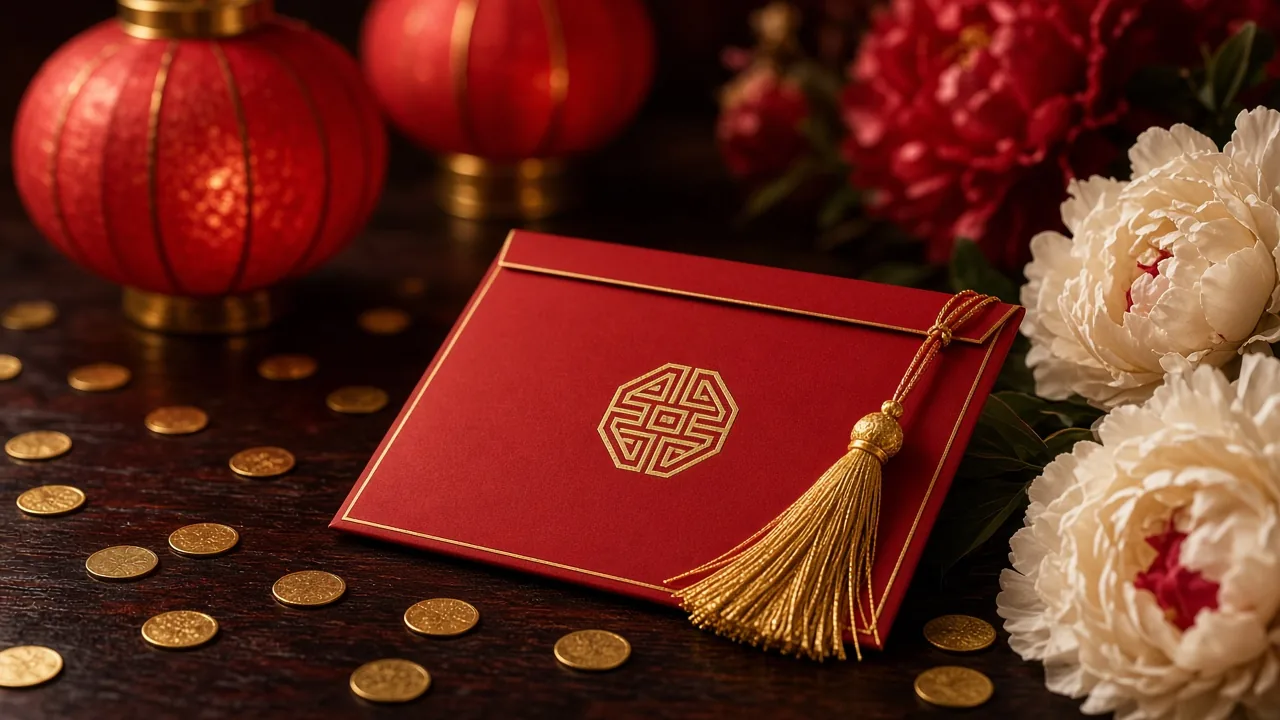
A wedding invitation looks different depending on where you stand. In one family it is a printed card with a seal. In another it is a visit with sweets, or a message from an elder, or a red envelope. All of these are correct, and none of them is the standard the others should follow.
This guide is a tour of how customs vary, so you can write an invitation that fits your own families, and so that guests from other traditions feel welcome when they open it. It is a starting point, not a rulebook. Practices differ between families, regions, and generations, even within one country.
Ask the people whose tradition it is. Then write the invitation in their words.
Names in the samples are invented. For the structure of an invitation, see the wedding invitation wording guide. The wedding invitations can carry your finished words.
Why invitations differ so much
An invitation is a small piece of etiquette, and etiquette comes from how families live. Four questions explain most of the differences.
- Who is inviting? The couple, their parents, both families, or the community.
- How does the invitation arrive? By post, by hand, in person, or as a message.
- What is being celebrated? One ceremony, or a series of events across several days.
- What does the design mean? Colours, symbols, scripts, and sacred words can carry weight.
Once you know the answers for your own wedding, much of the wording follows.
Who sends the invitation
In some customs the hosts are the parents, and their names lead the card. In others the couple hosts, and the card begins with them. In many, the two families issue the invitation together, sometimes as two cards that match.
In many communities the invitation comes from the elders, or from a community leader, and the couple’s names sit lower on the page. In some, a title such as Dr, Chief, Haji, or a family honorific is part of the name. Use the title the person uses, and in the order they would choose.
None of this needs a rule from outside. Ask who is hosting, ask how they would like to be named, and write it down.
How invitations travel
In person first
In many parts of the world, inviting is a visit. A family calls on relatives, brings sweets, or asks elders to attend, and the printed or digital invitation follows. A guest who hears from you in person feels that they were wanted. A guest who gets only a link may feel they were counted.
A first card for a blessing
In many Hindu families, the first invitation is offered at a temple or a home shrine, often to Lord Ganesha, before any guest receives one. The custom varies by region and family, but the idea is shared across many traditions: the wedding is first brought to a blessing.
Printed, posted, and passed on
Printed invitations travel by post, by courier, and by hand. In some communities, invitations are also shared through family groups, by voice message, or by word of mouth. A digital link does not replace these. It can sit alongside them, as the place where details and replies are kept. Read digital vs paper wedding invitations for how couples combine them.
Colours and symbols
Colour and symbol carry meaning, and the same one can mean different things in different places. Check before you choose.
- Red is the colour of luck and celebration for many Chinese families and in other parts of East and South Asia. Gold often goes beside it, for prosperity.
- White is associated with weddings in many Western countries, and with mourning in parts of East and South Asia. Ask a family before using it as the main colour.
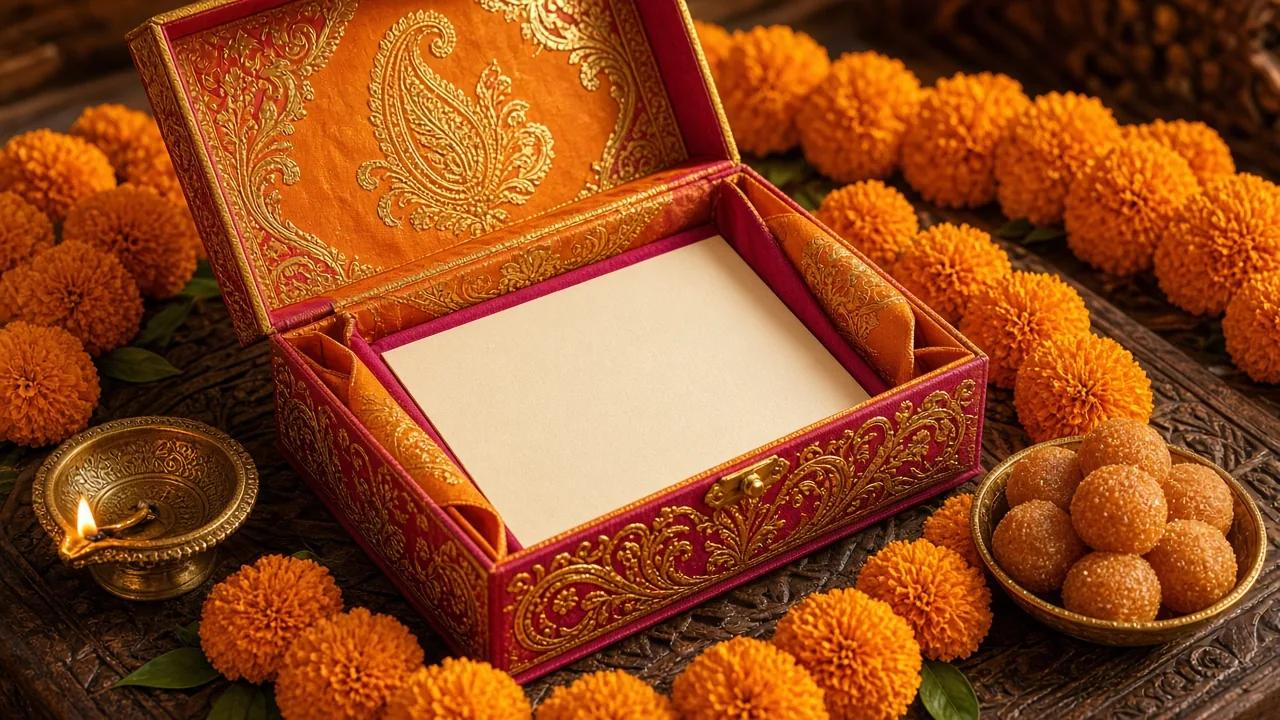
- Saffron, marigold, and deep pink are common in many South Asian celebrations, often with paisley and floral patterns.
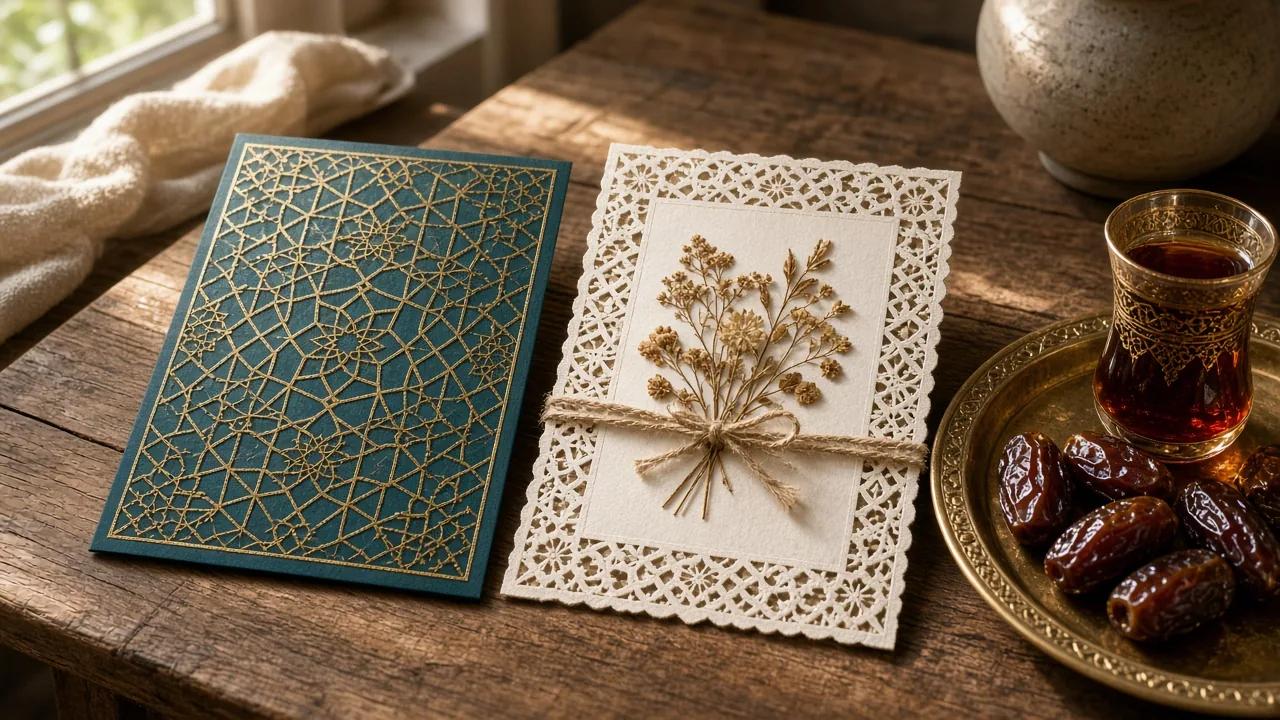
- Geometric and arabesque patterns are common in invitations in many Muslim communities, where figurative images are sometimes avoided.
- Knots, lanterns, and characters of good fortune appear in many Chinese celebrations. If you use a character, make sure it is the right one and the right way up.
When you borrow a symbol from a tradition that is not yours, ask someone who belongs to it. A motif used in the wrong place, or with the wrong meaning, can be more awkward than none at all.
One wedding, several events
In many places, the wedding is not one day. It is a series of events, each with its own meaning, dress, and guest list. A South Asian wedding can include a henna evening, a music night, a ceremony, and a reception. A Nigerian celebration may include a traditional engagement and a separate wedding. A Muslim wedding may have a nikah and a walima. A Jewish wedding may begin with a signing and a ceremony under a canopy.
An invitation can list each event with its own line, time, and place. Tell guests which events they are invited to, because the guest list often differs from one to the next. If dress matters, say so for each event.
Priya Nair and Daniel Cohen
invite you to celebrate their wedding

Henna evening
Thursday, 14 October 2027, at seven o’clock in the evening
The Garden Court

Wedding ceremony
Saturday, 16 October 2027, at eleven o’clock in the morning
The Garden Court

Reception
Saturday, 16 October 2027, at six o’clock in the evening
The River Room

Please let us know which events you can join.
Wording that carries a tradition
Names and honorifics
Spell names as families spell them, including accents and marks. Some customs name the couple in a set order, and some name families first. In many cultures, a wedding sponsor, godparent, or witness is named on the card. In Mexico and in the Philippines, for example, godparents or sponsors are often listed on the invitation. In other places, they are not mentioned at all.
Sacred words and verses
Many religious families open an invitation with a blessing, a verse, or a short phrase. Use the exact words the family uses, and ask someone who knows the language to check them. A spelling mistake in a sacred phrase is more noticeable than in a plain one.
Dates and calendars
Many families note a second date. Some Jewish families add the Hebrew date beside the civil one. Some Muslim families add the Islamic calendar date. Some Chinese families choose the day by an auspicious calendar and note it. A second date is an addition, not a replacement. Write the civil date in full, “Saturday, 16 October 2027”, so every guest can read it.
Scripts and languages
A bilingual invitation should carry the same facts in both languages. If one language reads right to left, set that side so it reads naturally on the page, and check it with someone who reads it. Put the names of the couple in both scripts if both are used by the families.
Money gifts, registries, and what to say
Customs around gifts differ widely. In many places guests give money, sometimes in a special envelope, and the amount is a private matter. In others, a gift registry is normal. Many communities give a mix. The invitation itself rarely needs a gift line. If you want to say something, put it on the website, and keep it gentle and optional.
Your presence is the gift. If you would like to give something, a contribution towards our first home is welcome, and we are grateful either way.
Honouring two traditions on one invitation
Many couples come from two cultures, two religions, or two countries. A good invitation can hold both, as long as neither is made smaller to fit the other.
- Ask each family what matters most. One or two things per side is usually enough: a name, a blessing, a colour, an event.
- Give each ceremony its own lines. Do not rename one family’s rite with the other family’s word.
- Repeat the key facts in both languages if both are used by guests.
- Explain what is not obvious. A short line, “A traditional tea ceremony begins the day”, helps guests who are new to it.
- Let both families see the draft before anything is printed or sent.
When two traditions share a card, the aim is not equal space. The aim is that each family can recognise itself in the words.
Writing for guests from many places
You do not have to know every custom to write a kind invitation. A few habits cover most cases.
- Write the date with the month in words, and give the time with its time zone.
- Say who is invited, including whether children and plus-ones are welcome.
- Name each event and say what to wear, in ordinary words rather than a label only one country uses.
- Mention anything that affects attendance: shoes removed, shoulders covered, a fast, a meal that is not served until late.
- Say how to reply and by when. See how to manage wedding RSVPs online for a plan.
For the order of the lines on the card, see what to put on a wedding invitation.
Mistakes to avoid
- Treating one country’s etiquette as the world’s.
- Using a symbol, a colour, or a sacred phrase without checking what it means.
- Printing a language you cannot read without having it checked.
- Leaving out the elders or the community custom of an in-person invitation.
- Putting registry or gift details on the card when the family would find them awkward.
- Using a numeric date that two countries read differently.
Read the draft aloud to someone from each family. If both of them recognise their own side, it is ready.
Questions couples ask
Is there a universal etiquette for wedding invitations?
No. Etiquette varies by culture, family, and region. A good invitation follows the customs of the hosts, states the key facts clearly, and welcomes guests who are used to something different.
Who should be named on a wedding invitation?
The hosts, whoever they are, then the couple. In some customs that means both sets of parents, in some the couple, and in some an elder or a community leader. Use the names and titles that people use themselves.
How do I include two cultures on one invitation?
Ask each family what matters most to them, give each ceremony its own lines, repeat key facts in both languages, and let both sides see the draft before it is sent.
Are there colours I should avoid on a wedding invitation?
Meanings vary. White is a wedding colour in many Western countries and a mourning colour in parts of East and South Asia. Check with a family from the tradition before you choose a main colour.
Can a digital invitation work for traditional weddings?
Yes, alongside the customs your family keeps. Visit or call first where that is the tradition, then share the link with the details and the reply.
Learn what each side needs, write it plainly, and share the draft before you send it. Browse the wedding invitations when you want the page.